Home » Gaming Guides » Table Game Guides
Out of all table games, Roulette is the purest “spin-and-breathe” table game. Simple rules, fast rounds, and plenty of bet types. Still, if you want to play smarter, you need more than luck. This table game guides page breaks down roulette rules, shows you how to play roulette step-by-step, and then moves into practical roulette tips and realistic roulette strategy—including what actually counts as the best roulette strategy for most players.
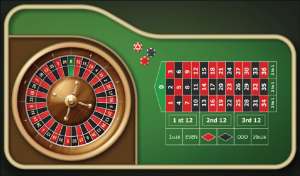
In short, table games are titles played on a felt or live table (or their digital twins) where you place chips on outcomes, and the dealer or software resolves the result. By contrast, unlike pure chance games, many table games also reward basic strategy and smart bet selection; therefore, your decisions can meaningfully influence results over time. Knowledge as much as luck makes a difference when playing table games.
Roulette is played on a wheel with numbered pockets and a betting layout on the table.
European roulette: numbers 1–36 + single 0
American roulette: numbers 1–36 + 0 + 00
French roulette: similar to European, often with extra rule variants (more on that below)
You place chips on the layout to predict where the ball will land. After bets close, the dealer spins the wheel and releases the ball.
If your bet covers the winning number/pocket group, you’re paid according to the table’s payout. Otherwise, the bet loses.
Roulette is rapid. The “skill” is in what you bet, how much you risk, and when you stop.
Get up to:
NZ$5,000
150 Free spins
100% match up to $5,000 on your deposits.
*New Players Only
Winbeatz's offer is available for newly registered players who have completed their first qualifying deposit.
Get up to:
NZ$1,000
200 Free spins + 1 Bonus Crab
100% match up to $1,000 on your deposits.
*New Players Only
Viking Luck's offer is available for newly registered customers who have completed their first qualifying deposit.
Get up to:
NZ$4,500
900 Free spins
100% match up to $4,500 on your deposits.
*New Players Only
GGbets's offer is available for newly registered players who have completed their first qualifying deposit.
The single biggest factor in roulette outcomes isn’t your “system”—it’s the wheel type.
🇪🇺 European (single-zero) has a lower house edge (about 2.70%).
🇺🇸 American (double-zero) has a higher house edge (about 5.26%).
If you care about long-term value, single-zero roulette is the default choice.
Some French tables offer player-friendly rules on even-money bets (red/black, odd/even, high/low):
🇫🇷 La Partage: if the ball lands on 0, you lose half your even-money bet.
🚨 En Prison: if 0 hits, your even-money bet is “imprisoned” and may be returned if you win next spin.
These rules reduce the house edge on even-money bets significantly—so they’re excellent when available.
These bets cover fewer numbers.
Straight up (one number) – highest payout, lowest hit rate
Split (two numbers)
Street (three numbers)
Corner (four numbers)
Line (six numbers)
Inside bets are exciting, but they swing hard. That’s why they’re risky for small bankrolls.
These bets cover large groups of numbers.
Red/Black
Odd/Even
High/Low (19–36 / 1–18)
Dozens (1–12, 13–24, 25–36)
Columns
Outside bets don’t “beat” roulette, but they often smooth the ride, which matters for bankroll control.
Pick the right wheel before you pick a strategy. This is the first “edge” you can get:
Choose European / French over American whenever possible.
If you see La Partage or En Prison, that’s a strong sign the table is worth your time.
Avoid the worst-value bet on the table
On American wheels, the Top Line / Five-Number bet (0-00-1-2-3) is typically one of the worst value bets. It looks tempting; it’s usually a tax.
Keep your bet sizing boring
Most losses come from “one more spin, double it.” A calm, consistent stake beats emotional sizing every time.
Let’s be blunt: no roulette strategy changes the house edge. That said, a good strategy can:
⬇️ reduce volatility,
🎯 keep sessions controlled,
✅ help you avoid the biggest “leak” (tilt),
🥃 and make the game more enjoyable.
If you want the most sustainable approach:
1️⃣ Choose European/French roulette
2️⃣ Play outside bets (or simple dozens/columns)
3️⃣ Use flat stakes (same amount each spin)
4️⃣ Set a time and loss limit before you start
It’s not glamorous—but it’s the closest thing to a sensible plan.
Martingale (double after loss)
✅ Pros: simple, feels “logical”
❌ Cons: bankroll gets nuked fast; table limits cap you; risk spikes hard
Fibonacci / D’Alembert (gentler progressions)
✅ Pros: less explosive than Martingale
❌ Cons: still can’t overcome house edge; long losing runs still hurt
Paroli (press wins)
✅ Pros: keeps losses capped, uses winning streaks
❌ Cons: streaks end; still pure variance
If you use any system, treat it like a staking rhythm, not a mathematical advantage.
This is where roulette players either level up—or donate faster.
1) Set a session bankroll (and protect it)
Decide the amount you’re happy to lose as entertainment cost.
2) Use a stop-loss and a stop-win
Stop-loss: the point you walk, no matter what
Stop-win: the point you lock profit and leave (or at least cash down)
3) Keep stakes proportional to your bankroll
A practical guideline:
Outside bets: ~1–2% of bankroll per spin
Inside bets: smaller (because variance is higher)
4) Don’t chase losses
Roulette has no memory. Chasing is how sessions become expensive.
You choose European roulette.
You place a bet on Red.
Dealer spins, ball lands on 23 Red.
Red wins → you’re paid (even-money minus 0’s house edge baked into the game).
Next spin, you decide whether to repeat, switch, or stop—based on your plan, not your mood.
That’s roulette. The only real “skill” is sticking to your process. Try a demo game first.
If you’d rather play with a plan than wing it, our guides are built for you. Each one breaks down the rules, best bet types, and practical strategy—plus bankroll tips that keep sessions controlled and enjoyable. Better yet, we keep everything beginner-friendly while still adding the details experienced players care about (RTP, volatility, house edge, and common mistakes). For deeper step-by-step help across every category, head to our Gaming Guides hub and pick the exact guide you need.
Table games give you something slots don’t: decision-making. While luck still drives outcomes, games like blackjack, roulette, baccarat, and poker let you choose bets, manage risk, and control pace—so your bankroll tends to last longer when you play with a plan. Just as importantly, table games are easy to practice in demo mode, which helps you learn rules and bet types before risking real money. If you want to explore more options beyond roulette, head to our games page to browse all categories in one place.
Table games like Roulette is fast and emotionally sticky—especially after near-misses. If you feel yourself raising stakes, skipping breaks, or trying to “get even,” pause. Use reality checks, deposit limits, and cooling-off tools where available, and treat roulette as entertainment—not income. Learn how to manage risk with our responsible gambling guide.
The best roulette strategy is choosing single-zero roulette, using simple bets, and managing bankroll calmly—because no system beats the house edge.
Start with bet types (inside/outside), then learn the difference between European vs American, and finally look for French roulette rules like La Partage.
They’re fun, but they don’t change probability. Use them for entertainment, not decision-making.
Gambling Industry Specialist
Daniel Morven is a content writer and gambling industry specialist with over a decade of experience spanning both physical casinos and online platforms. Throughout his career, he has worked closely with casino teams, game providers, and operational staff, including several years in project management roles that gave him first-hand insight into how casinos operate behind the scenes.