Online gambling is easy in New Zealand—maybe too easy. A few taps on your phone and you’re depositing money, sharing personal details, and trusting a website you’ve never met to pay you back when you win. Most of the time it’s fine. However, when it goes wrong, it can go really wrong: frozen withdrawals, fake “VIP managers”, dodgy mirror sites, or support teams that suddenly disappear the moment you request a payout.
This article is a security-first checklist written for NZ players. It’s not about which casino is “best”. It’s about how to reduce risk, protect your money and identity, and avoid the traps that catch people who are otherwise smart and careful.
NZ context matters: The Department of Internal Affairs (DIA) notes that it’s legal for New Zealanders to gamble on offshore casino sites, but online casinos based in New Zealand are illegal, and advertising offshore casino gambling websites in New Zealand is illegal. Also, the NZ Government is actively working on legislation to regulate online casino gambling.
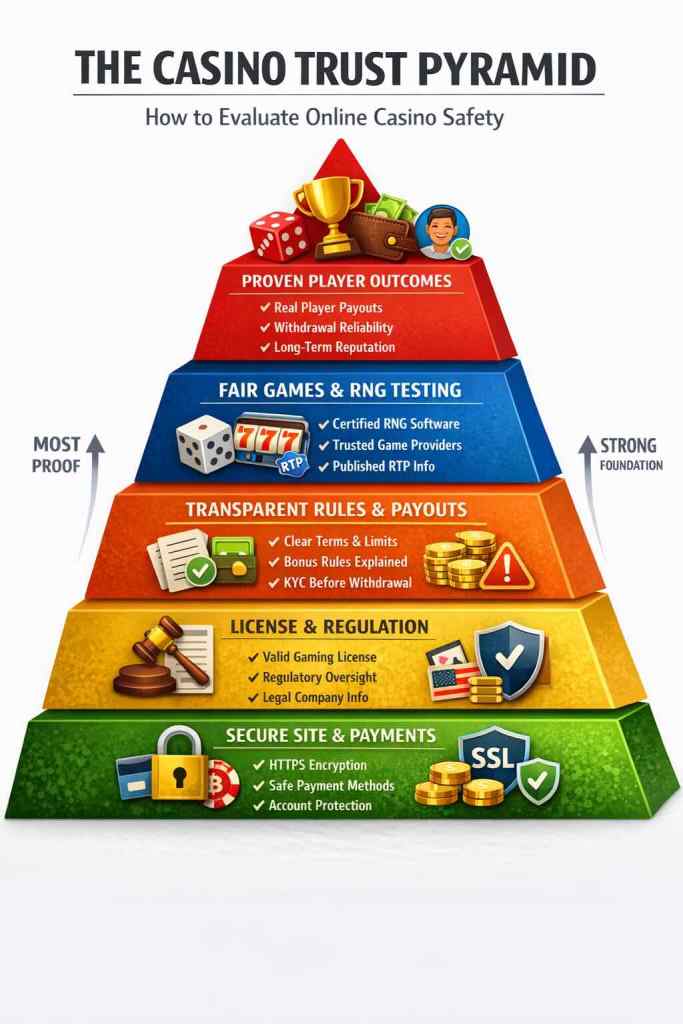
1) Start with the one question that saves you the most pain: “Who regulates this site?”
A casino can look professional and still be risky. The “trust layer” is licensing and oversight—because when a dispute happens (withdrawal delayed, account closed, bonus voided), you need a regulator framework behind you.
When you open a casino website, scroll to the footer and look for:
- A licence authority name and number
- A company name (legal entity)
- A registered address
- Links to terms, privacy policy, and responsible gambling
If you can’t find any of that in two minutes, treat it like a red flag.
Why licensing matters: Properly regulated markets require things like financial controls, complaint processes, and technical compliance standards. For example, the UK Gambling Commission maintains rules around software testing and even publishes a list of approved third-party test houses.
2) Don’t get fooled by the “bonus glow” — read the withdrawal pathway instead
Most security problems don’t start with malware. They start with a player clicking Accept Bonus without understanding what happens next.
Before you deposit, scan for:
- Withdrawal limits (daily/weekly/monthly caps)
- KYC timing (do they verify before you play or only at withdrawal?)
- Bonus wagering rules and which games count
- “Management discretion” clauses that let them void winnings broadly
Why this matters for security: the easiest way for a shady operator to “legally” avoid paying is to hide behind ambiguous terms. If the rules are vague, you’re the one taking the risk.
Quick rule: If terms are hard to find, poorly written, or full of loopholes (“we may refuse withdrawals for any reason”), it’s not worth it.
3) Verify you’re on the real website (mirror sites and clones are a thing)
This is more common than people think: scam networks clone legit-looking casinos or create “mirror” domains that rank on social media or search, then collect deposits and disappear.
Do this every time:
- Type the domain manually (don’t trust random links in DMs)
- Check the padlock and confirm it’s HTTPS
- Avoid sites that ask you to install “special software” or browser add-ons
Also, be skeptical of “exclusive influencer links” or promos that feel rushed. NZ authorities have actively warned about illegal offshore casino promotion, including crackdowns on social media advertising.
4) Treat your casino account like banking (because it basically is)
If someone gets into your casino account, they can:
- Withdraw your balance
- Change your email/phone
- Access personal details you used for verification
So do the basics properly:
- Use a unique password (never reuse your email password)
- Turn on 2FA if the casino supports it
- Use a password manager
And keep your device safe. NZ banks and security bodies consistently advise keeping software updated and being cautious of scams and credential theft.
5) Payments: choose methods that protect you, not just what’s convenient
For NZ players, payment issues are often where trouble starts: chargeback confusion, blocked transactions, or withdrawal delays.
Here’s a practical way to think about it:
- Cards: convenient, but sometimes stricter bank checks; also higher exposure if your details leak.
- E-wallets: often cleaner separation from your bank and can be faster for withdrawals.
- Bank transfer: usually solid, but slower and less flexible.
- Crypto: can be fast, but you’re responsible for wallet security and correct addresses.
Whatever you use, keep a paper trail:
- screenshots of deposits
- transaction IDs
- emails confirming withdrawals
That evidence matters if you need to dispute something later.
6) KYC (Verification): the safe way to handle it in NZ
Verification feels annoying, but it’s normal on legitimate platforms. The security mistake is sending documents carelessly.
Best practice:
- Upload documents only inside your logged-in account portal (not via email unless absolutely necessary)
- Watermark copies lightly (e.g., “For verification only – [date]”)
- Never share full card photos; if required, mask the middle digits
If a “support agent” asks you to send documents over Telegram/WhatsApp—walk away.
7) If you think you’ve been scammed: act fast (speed matters)
The NZ Government’s consumer protection guidance is blunt for a reason: stop contact immediately, and take action.
Also, the NZ government scam guidance emphasises reporting quickly.
And New Zealand’s cyber security reporting advice highlights contacting CERT NZ and your bank as soon as possible to minimise or potentially reverse losses.
Here’s the “do this now” sequence:
- Stop contact and stop sending money
- Contact your bank/payment provider
- Change passwords (email first, then casino accounts)
- Report the incident through official NZ channels
Online gambling in New Zealand sits in a unique space: widely accessible, often offshore, and evolving fast as the government works toward a more regulated framework.
So the safest approach is to assume you are the security system—and build habits that reduce risk: verify licensing, read withdrawal rules, protect your accounts like banking, and keep records like a professional.