Responsible gambling is one of those phrases everyone has heard, but very few people feel is explained properly. Most guides sound either overly clinical or unrealistically strict — as if the only responsible option is to never gamble at all. That approach doesn’t reflect reality, especially in New Zealand, where many adults gamble casually and responsibly without issue.
The truth is simpler and more practical: responsible gambling is about control, structure, and intention, not perfection. This guide is written for real players — people who enjoy gambling, understand there’s risk involved, and want to keep it that way without sliding into stress, regret, or harm.
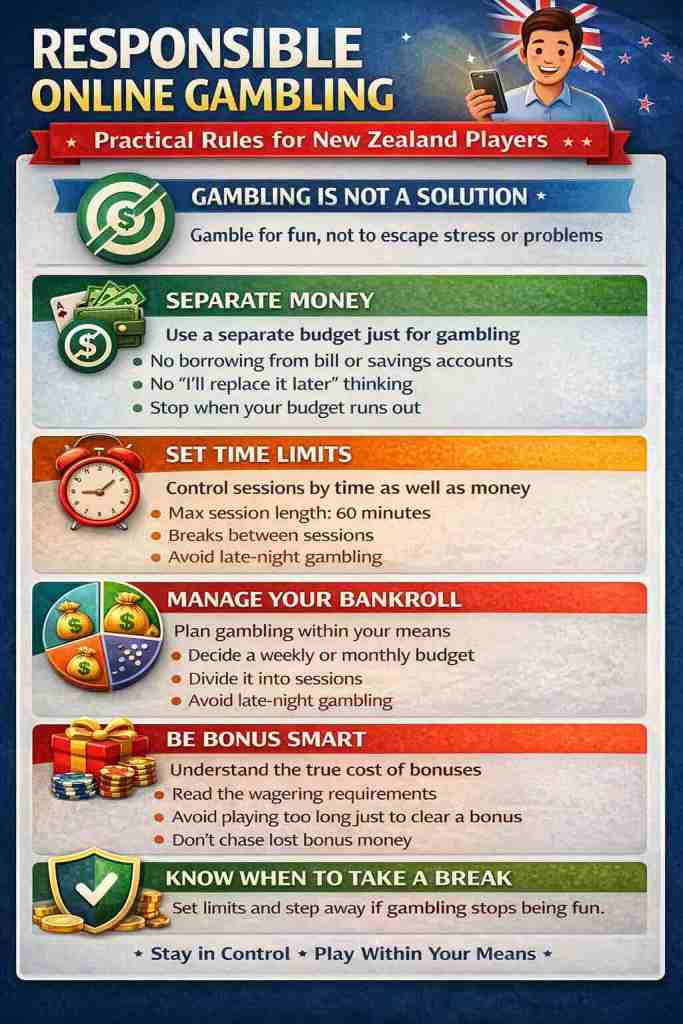
Start with the right mindset: gambling is entertainment, not a solution
The most important rule of responsible gambling isn’t a limit or a tool — it’s why you’re gambling in the first place.
Healthy gambling looks like:
- Playing for enjoyment or curiosity
- Accepting losses as part of the experience
- Walking away without emotional distress
Gambling becomes risky when it starts to serve another purpose, such as:
- Escaping stress or boredom
- Trying to fix financial pressure
- Chasing a sense of control or excitement
Once gambling shifts from entertainment to emotional coping, decision-making changes. Bets stop being about odds or enjoyment and start being about how you feel in the moment. Recognising this shift early is one of the strongest protective factors available.
Separate gambling money from real-life money — always
One of the most practical habits for New Zealand players is keeping gambling funds completely separate from everyday finances.
This means:
- No gambling from accounts used for rent, bills, or savings
- No “borrowing” from other budgets to continue a session
- No mental accounting like “I’ll just replace it later”.
A simple rule works best: if losing this money would bother you tomorrow, it shouldn’t be used for gambling today.
This separation creates psychological distance. When gambling money runs out, the session ends — without negotiation.
Why time limits matter more than money limits
Most people focus on money limits, but time limits are often more effective.
As sessions get longer:
- Concentration drops
- Emotional reactions increase
- Decision quality declines
This is especially relevant for online gambling, where there are no natural stopping points. A session that starts casually can easily stretch into hours without feeling like it.
Practical time-based rules include:
- Fixed session lengths (for example, 45–60 minutes)
- Mandatory breaks between sessions
- No late-night gambling when fatigue is high
Time limits protect decision quality, not just your balance.
Bankroll management doesn’t need to be complicated
Bankroll management sounds technical, but at its core it’s about predictability.
A simple approach:
- Decide how much you’re willing to lose over a week or month.
- Divide that amount into smaller sessions
- Never exceed the session allocation, regardless of outcomes
This prevents two common problems:
- Trying to “make the most” of a single session
- Increasing stakes emotionally after losses or wins
The goal isn’t to win back money — it’s to keep outcomes predictable and manageable.
Bonuses are not free money — treat them cautiously
Bonuses are one of the biggest areas where responsible gambling breaks down. They feel like an advantage, but they often increase exposure to risk.
Key points many players overlook:
- Bonuses increase total wagering, not just balance
- Wagering requirements multiply losses before withdrawals
- Time pressure encourages longer sessions
Responsible play means:
- Skipping bonuses you don’t fully understand
- Avoiding bonuses during emotional sessions
- Viewing bonuses as optional extras, not incentives
If a bonus makes you play longer or risk more than you intended, it’s working against you.
Use gambling tools proactively, not reactively
Most reputable platforms offer responsible gambling tools. The mistake many players make is waiting until they feel out of control to use them.
Effective tools include:
- Deposit limits
- Loss limits
- Time reminders
- Cooling-off periods
Using these tools early turns them into support systems, not emergency brakes. Once emotions are already high, tools feel restrictive. When used from the start, they feel protective.
Pay attention to emotional signals, not just financial ones
Responsible gambling isn’t only about money. Emotional signals often appear first.
Warning signs include:
- Feeling irritated or restless when not gambling
- Thinking about recovering losses outside sessions
- Gambling when tired, stressed, or upset
- Feeling defensive when limits are suggested
These signals don’t mean you’ve failed. They mean it’s time to pause, reflect, and adjust structure.
Know when to step back — and why that’s a strength
Taking a break from gambling isn’t a loss of control. It’s often the opposite.
Stepping back is especially important when:
- Gambling feels like an obligation
- Sessions are no longer enjoyable
- Losses affect mood beyond the session
New Zealand offers confidential support and information through organisations. Check our responsible gambling guide to find out more, which promotes harm minimisation and informed play.
Support tools exist to help players stay in control, not to judge or restrict unnecessarily.
Responsible gambling is about consistency, not perfection
No one gambles perfectly. Occasional mistakes, emotional sessions, or poor decisions happen. What matters is whether patterns are recognised and corrected early.
Healthy gambling habits are:
- Repeatable
- Predictable
- Emotionally neutral
When gambling starts to feel stressful, secretive, or urgent, those habits need adjusting.
Control is built before the first bet
Responsible gambling doesn’t begin when things go wrong. It begins before you start playing.
By separating money, setting time boundaries, understanding risk, and paying attention to emotional signals, New Zealand players can keep gambling in its proper place — as entertainment, not pressure.
The aim isn’t to avoid losses entirely. It’s to avoid losing control. When structure is in place, gambling stays enjoyable, manageable, and sustainable over the long term.