New Zealand’s Department of Internal Affairs (DIA) has moved to clamp down on popular “prediction markets,” stating that platforms like Kalshi and Polymarket fall under New Zealand gambling law and are not authorised to operate for NZ users.
The story matters beyond crypto Twitter hype: it’s a test case for how regulators treat “financial-style” betting products that look like markets but feel like wagering.
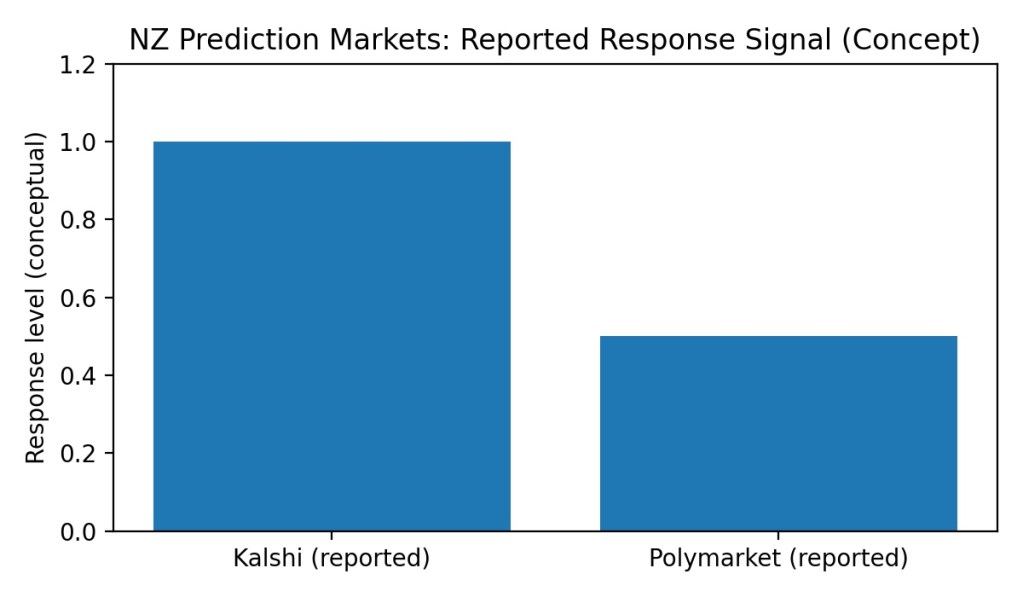
RNZ reported DIA letters were sent to both platforms, with Kalshi acting quickly to block New Zealand-based access, while Polymarket appeared slower to respond.
What happened?
DIA’s position is essentially:
– these products involve staking money on uncertain future events,
– outcomes are determined by external events,
– and participation resembles gambling under NZ definitions.
That framing puts prediction markets in the same bucket as other gambling products that require authorisation or licensing.
Why is this bigger than a single platform?
Prediction markets sit in an uncomfortable middle ground:
– Supporters argue they are useful forecasting tools,
– Critics argue they are a rebrand of gambling that bypasses consumer protections.
For regulators, the decision is often straightforward: if a product enables public wagering, it must either be regulated as gambling or prohibited.
The alternative — letting it run as a lightly supervised “market” — creates obvious harm-minimisation gaps.
Key implications for New Zealand
1) Expect tighter scrutiny of offshore “grey-zone” gambling
This action signals that New Zealand is willing to target products that are not traditional online casinos or sportsbooks.
It strengthens the message that “offshore + internet” is not a free pass.
2) Payments and access will be a battleground
One reason these platforms have grown is payment ease (crypto rails, or card access via intermediaries).
If enforcement escalates, we could see:
– tougher payment blocks,
– stronger geofencing expectations,
– and more active follow-ups for non-compliance.
3) The online casino licensing push makes this timing logical
New Zealand is simultaneously debating how to regulate online casino gambling.
From a policy lens, it makes sense to reduce unregulated “side doors” while building a licensed framework.
What players should know
If a platform is deemed illegal locally, users can face:
– account shutdowns,
– withdrawal restrictions or delays,
– and lack of effective dispute options.
This doesn’t mean users are criminals for clicking a link.
But it does mean risk shifts heavily onto the consumer.
Daniel’s take
I don’t think this is the last word on prediction markets — especially as some jurisdictions try to frame them as financial products.
But in New Zealand, the regulatory instinct is consistent: if it behaves like gambling, it will be treated like gambling.
The bigger story is that the DIA is signalling seriousness ahead of wider online gambling reform.
If New Zealand wants a safer market, it will need to keep applying pressure on unlicensed operators and “product loopholes,” not only build new licensing rules.