Expertise: Gambling Analyst, Psychology
- Romania just changed the rules of the game for retail gambling—and it did it in a way that will ripple far beyond Bucharest.
On March 9, 2026, The Guardian reported that Romania enacted an emergency decree that allows local councils to ban or heavily restrict betting shops and slot machine halls, forcing operators to secure both a national licence and a local permit. In plain terms: the state stopped treating gambling venues as a purely national licensing issue and handed veto power to municipalities.
That governance shift matters. It creates a patchwork map where one city can lock the doors while the next city keeps the lights on. It also signals how fast European jurisdictions now move when public pressure mounts around gambling harm—especially in neighbourhoods saturated with shops and machines.
This isn’t a technical tweak. It’s a blunt instrument aimed at density, visibility, and access.
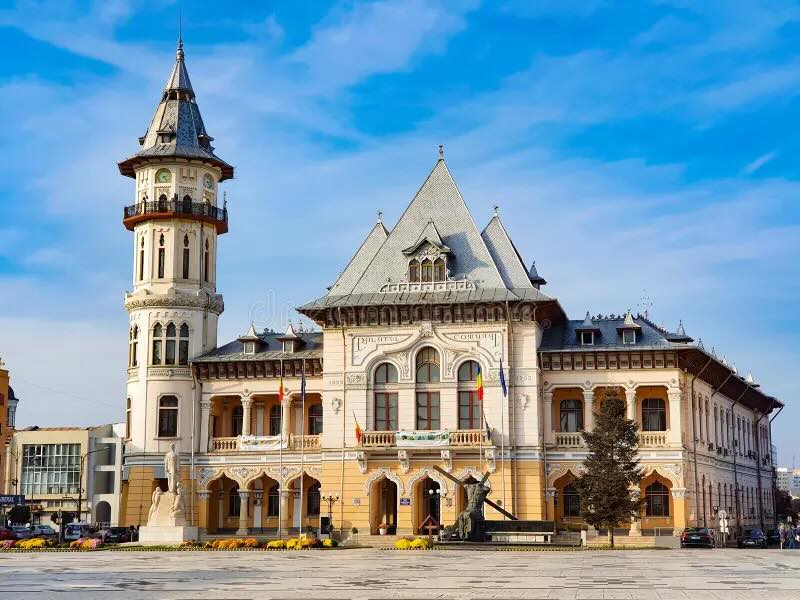
Romania City Hall.
What Romania’s emergency decree does
According to The Guardian, Romania’s new emergency decree requires gambling operators to hold both:
- a national licence, and
- a local licence/approval, with municipal councils gaining real power to reject venues.
That second requirement flips leverage from operators to communities. If a council votes “no,” the operator can’t simply point to its national paperwork and proceed.
The Guardian also reported that some cities plan full bans, with Slatina named as one example where local leadership cited severe community harm as a catalyst.
Why councils wanted this power
The political logic is straightforward:
- Residents see the shops. They pass them daily.
- Parents notice when venues cluster near schools and transit routes.
- Local leaders carry the cost of social fallout—debt, family breakdown, petty crime—while tax revenue flows upward.
By shifting authority downward, Romania effectively told communities: “You decide what you tolerate.”
The immediate market impact: uncertainty, patchwork access, and compliance pressure
When a country introduces local veto power, operators face three immediate problems.
1) Expansion plans turn into political campaigns
Retail gambling depends on real estate and foot traffic. Under a local-approval regime, opening a shop becomes more than leasing a storefront. It becomes stakeholder management:
- neighbourhood objections
- council hearings
- zoning disputes
- visibility rules
- proximity limits (schools, churches, youth facilities)
Operators will likely have to invest in community relations and compliance capacity, not just marketing.
2) Operators face a “Swiss cheese” footprint
A national ban creates a clear boundary. A local ban creates holes. Chains can find themselves with profitable corridors broken by municipal dry zones.
That fragmentation can push operators toward:
- consolidating in permissive areas (risking over-saturation there)
- lobbying for uniform national standards
- shifting spend into online products where legal and available
3) Enforcement becomes more visible—and more political
Local licensing power only works if councils enforce it. That means:
- local inspections
- closure orders
- public announcements
- sometimes legal battles
That visibility can accelerate the moral narrative: “We banned this because it harms people.” Operators then fight not only regulators, but the public story.
Why Romania moved now: density, harm, and social pressure
The Guardian described strong public concern around addiction and social harm, alongside frustration at how quickly gambling venues spread—particularly in major cities.
Romania’s model mirrors a wider European theme: governments increasingly focus on availability and advertising, not just licensing integrity. When a market reaches saturation, policymakers often conclude that even “compliant” venues still cause harm through sheer presence.
Tax revenue no longer buys political immunity
The Guardian noted that Romania’s gambling industry generated nearly €1 billion in taxes in 2025, yet political momentum still swung toward restrictions.
That point matters for every jurisdiction watching this. Once the electorate frames gambling as a public health issue, tax revenue becomes a weak defence. Governments can still take the money—then tighten the screws anyway.
The European context: local control is becoming a preferred weapon
Romania’s move fits a wider trend: countries look for “structural” levers that reduce exposure without needing to prosecute individual gamblers.
Local licensing power achieves that because it:
- reduces venue density
- allows targeted interventions in high-harm areas
- fits democratic accountability (“your council decided”)
That approach also helps national governments manage political risk. Instead of owning a total ban, they can say: “Communities choose.”
What this means for iGaming and the online shift
When retail access shrinks, demand doesn’t always disappear. It often migrates.
In some markets, tighter retail controls correlate with higher online participation—especially if legal online options exist. Romania’s specific online framework and enforcement posture will determine whether consumers migrate to regulated online services or drift into offshore and unregulated channels.
That’s why consumer education and safer-gambling tooling matter more when retail becomes harder to access. People who move online often face:
- faster play cycles
- more private consumption
- easier deposit mechanics
- fewer social friction points
If you’re assessing online options anywhere, focus on clear terms, straightforward KYC, and player controls that actually work. For a practical starting point on withdrawal reliability (often the first pain point users notice), see fast withdrawal casinos.
Potential next steps: advertising limits, loss caps, and national tightening
The Guardian reported that Romania’s parliament is also considering broader restrictions, including advertising bans, age measures, and caps on losses.
That sequencing matches how many jurisdictions tighten gambling:
- Control access (location, density, local bans)
- Control messaging (advertising restrictions)
- Control spend (loss limits, deposit caps, affordability checks)
Romania’s emergency decree sits firmly in step one. If step two and three follow, the retail landscape could shrink further and reshape operator economics even more aggressively.
What operators should do now: compliance-first, data-led, politically aware
If you operate retail gambling in a jurisdiction flirting with local veto power, Romania offers a warning and a playbook.
Build a local licensing strategy before you need it
Operators should treat councils like regulators, not obstacles. That means:
- mapping council sentiment
- tracking local elections
- preparing community impact commitments
- documenting harm-minimisation measures in local terms
Use density data to avoid becoming the symbol of saturation
When venues cluster, they become an easy target. Operators that control expansion and spacing reduce political heat.
Prepare for a dual-compliance world
Dual licensing creates layered audits:
- national AML and integrity checks
- local zoning and community standards
- enforcement that differs by municipality
Operators that already run multi-jurisdiction compliance frameworks will adapt faster than those built purely for scale.
The bigger signal: gambling policy is turning local, fast
Romania didn’t just restrict gambling. It decentralised gambling control. That’s the headline other governments will notice—especially those struggling to respond to visible venue saturation.
Even if other countries don’t copy the exact decree, the concept will travel: give communities veto power, then let the patchwork apply pressure without a national ban.
For operators, that’s a new reality. For policymakers, it’s an attractive compromise. For communities, it’s a lever they’ve wanted for years.